Diamond Education
How to read an IGI certificate
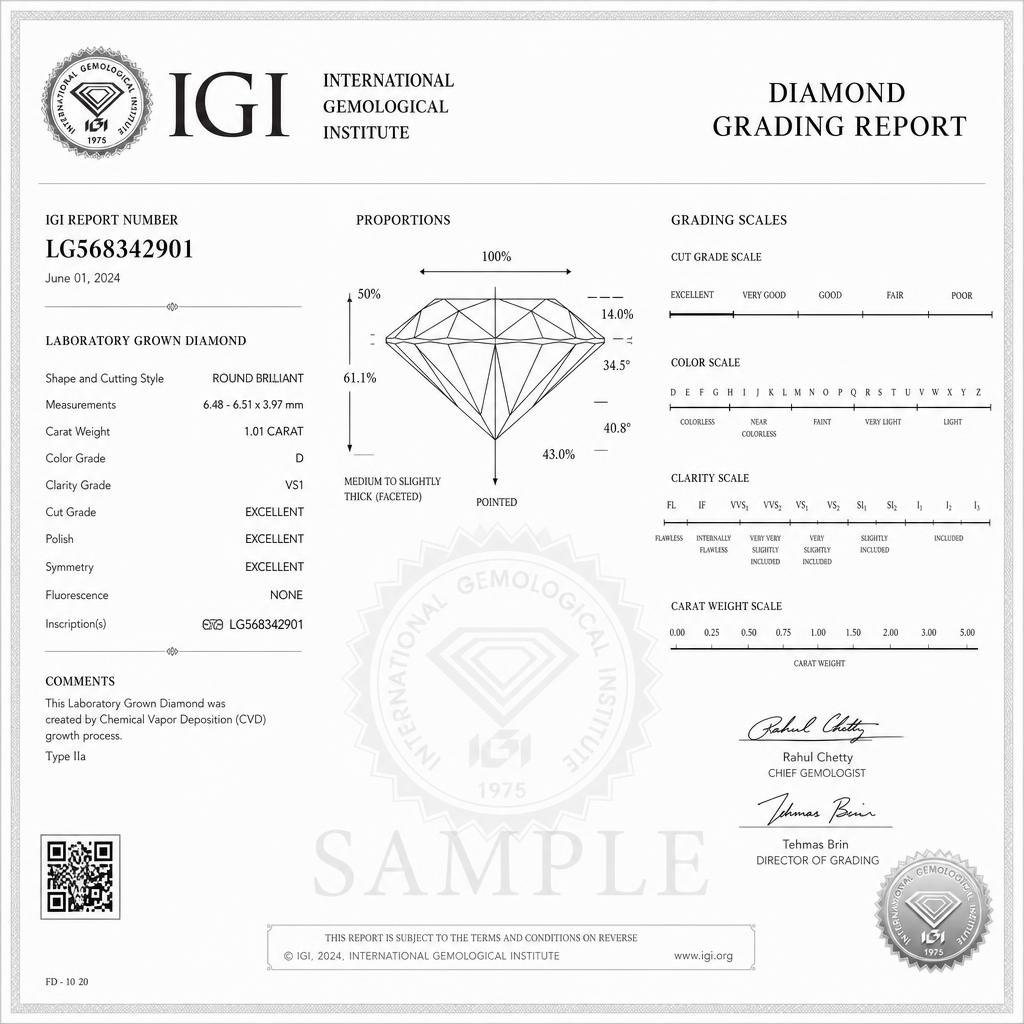
Every diamond we sell is graded independently by the International Gemological Institute, and the report travels with your piece. It can look like a wall of numbers and diagrams. In practice, a handful of them tell the whole story.
The four Cs, briefly
Cut is the one to care about most. It governs how the stone gathers and returns light, and a superb cut can make a smaller stone outshine a larger, lazier one. Look for Excellent or Ideal and let it lead every other decision.
Colour runs from D (icy white) down the alphabet toward warm. In the D–H range a stone reads as white to the eye, especially once set in silver.
Clarity describes the tiny natural marks inside, called inclusions. Anything VS and above is "eye-clean" - invisible without magnification. Paying for flawless is often paying for something only a microscope will ever enjoy.
Carat is weight, not size. Two stones of equal carat can look quite different depending on how they are cut - which is exactly why cut matters more than the headline number.
The parts most people miss
Two more lines are worth a glance. The report number is often laser-inscribed on the stone's girdle - your guarantee that this certificate belongs to this diamond. And the note confirming the stone is laboratory-grown is stated plainly, so there is never any ambiguity about what you are buying.
What we choose
We stock stones we would happily wear ourselves: excellent cut first, colour and clarity that read clean to the eye, and a carat that suits the design rather than the spec sheet. The certificate is simply your proof, in writing, that the stone in your hand is exactly what we said it is.
