
The Atelier
The making of a solitaire

A solitaire looks like the simplest thing we make. One stone, one band. That simplicity is exactly why it is the hardest to get right - there is nowhere to hide a wandering line or a lazy join. Everything shows.
Ours begins not with the diamond but with a drawing. A designer sketches the profile at three times life size, because a curve that looks right at that scale often looks heavy on a finger, and a shoulder that looks delicate on paper can turn out too fragile to hold a stone for a lifetime. The drawing is argued over, redrawn, and only then cast in wax.
It begins with the seat
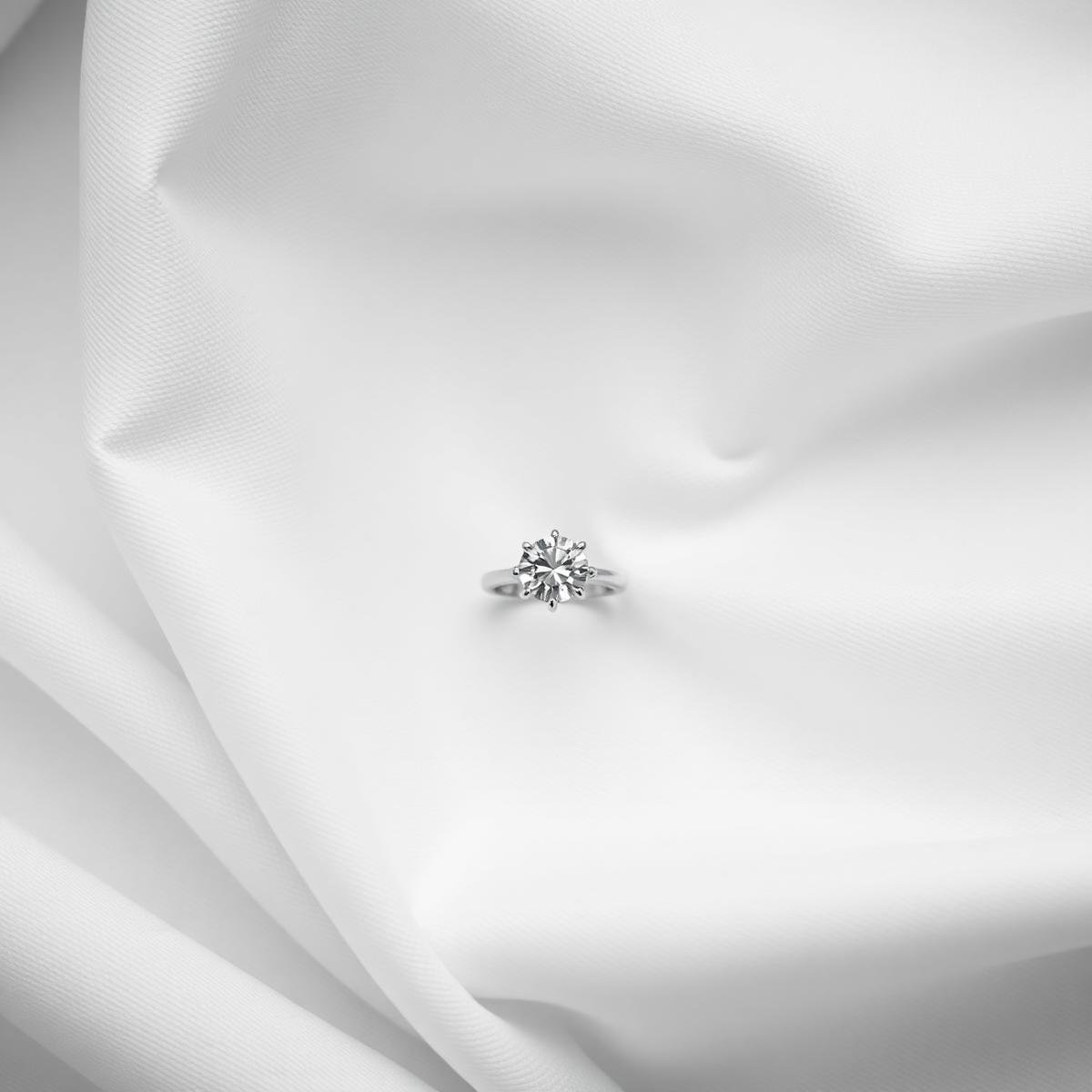
Before a diamond is ever set, our silversmiths cut the seat it will rest in. A fraction of a millimetre too deep and the stone sinks and dulls; too shallow and it sits proud and catches. The seat is filed, checked under a loupe, and filed again until the diamond drops in and simply belongs there - level, centred, and low enough to live with.
Four prongs, four decisions
Each prong is bent over the crown of the stone by hand, one at a time, in a diagonal order so the diamond is pulled down evenly rather than tipped to one side. The tips are then rounded so they never snag on a sleeve, and polished until they disappear against the metal. It is slow, deliberate work - a good setter will spend longer on the last ten percent than on everything before it.
The best setting is the one you never notice - only the light it lets through.
The finish nobody sees
Finally the piece is polished inside and out - including the inner band, the part only the wearer will ever feel. It makes no difference to a photograph and every difference to how the ring sits on the hand at the end of a long day. That, to us, is the whole idea of the atelier: the care you cannot see is the care that lasts.
What you are left with is a piece that reads as effortless. That effortlessness is the point, and it is the part that takes the longest.